Vetting a Multifunctional Digital Printing Machine Supplier: Capacity, QC, and Delivery Assurance

Vetting a multifunctional digital printing machine supplier comes down to three verifiable questions: can the factory actually build the configuration your order mix requires, can it prove quality before the machine leaves the dock, and will it stay accountable after the machine is installed in your plant? Brochures, exhibition photography, and price sheets matter far less than the evidence sitting behind those three answers.
This guide is written for packaging factories, converters, brand owners, and distributors evaluating a multifunctional digital printing machine for a corrugated packaging project. It uses Guangdong Goking Intelligent Technology Co., Ltd. (GOKING) — a Dongguan-based manufacturer of single-pass and multi-pass digital printing machines — as a fact-based example of the evidence any shortlisted supplier should be able to produce. GOKING was founded in 2020, operates a 10,000 ㎡ manufacturing facility with 152 employees and a 38-engineer R&D team, produces 864 sets per year, and exports 49% of its output to the EU, Africa, Latin America, Russia, Kazakhstan, and Turkey.
Problem Definition: Why Supplier Vetting Fails Before the Machine Arrives
The cost of choosing the wrong digital printing machine supplier is rarely visible at the quotation stage. It shows up later, in three predictable places.
- Capacity mismatch. The supplier accepts the order, then discovers that the requested printhead count, print width, or color configuration needs machine hours that are already committed to other customers. Lead time moves; the buyer's own customer deadlines do not.
- Unverified quality claims. "Fully tested" is a phrase, not a protocol. Unless a buyer knows which tests are performed, on which unit, and with what pass criteria, the claim cannot be checked.
- Delivery and after-sales gap. The machine arrives, but installation, commissioning, operator training, spare parts, and technical response are undefined. Downtime becomes the buyer's problem.
All three failures share one root cause: the buyer evaluated a product catalogue instead of a production and delivery system. For this equipment, supplier evaluation is a project-fit exercise rather than a generic brand comparison. The useful question is not which machine is best in the abstract, but which supplier can deliver a specific configuration, on a committed schedule, for a specific material mix — corrugated board, honeycomb board, kraft paper, or coated paper — at a print quality the buyer's own customers will accept.
Industry Background: Why Supplier Capability Is Now the Deciding Variable
Demand context explains why capacity and delivery assurance have moved to the center of the evaluation. The digital printing packaging market was valued at USD 30.2 billion in 2024 and is expected to reach USD 46.2 billion by 2029, according to MarketsandMarkets. Grand View Research values the wider digital printing market at USD 38.0 billion in 2023, projected to reach USD 57.0 billion by 2030, with inkjet technology holding the largest technology share at 48.4% in 2023. Reports and Data sizes the single-pass digital printing machine segment at USD 3.2 billion in 2024, projected to reach USD 6.5 billion by 2034, while Market Research Future estimates Asia-Pacific at approximately 41.6% of digital printing revenue share in 2025.
Two operational shifts sit underneath those figures. First, short-run and frequently changing jobs have become normal rather than exceptional in packaging and carton printing: variable data printing has made runs below 3,000 units economically viable, a range that was previously cost-prohibitive. Second, the machine base itself is changing — multi-pass scanning systems are chosen where high clarity matters, while single-pass systems are chosen where throughput dominates.
Manufacturing geography matters as well. China's digital printing machinery exports are supported by a concentrated industrial cluster in Guangdong province, which is where GOKING's 10,000 ㎡ production base is located. For buyers, the practical implication is that supplier density is high and capability varies widely — which makes verification, not discovery, the scarce skill.
Compliance framing also belongs in the background review. Industrial machines sold into the EU are assessed through risk assessment practice described in EN ISO 12100, and electrical equipment through IEC 60204-1 (EN 60204-1). These are the reference points a buyer should use when asking a supplier how the electrical cabinet, guarding, and safety functions of a digital press are documented.
Detailed Solution: Five Verification Blocks for a Multifunctional Digital Printing Machine Supplier
A structured vetting process can be organized into five blocks. Each block produces a document or a number the buyer can hold onto, rather than an impression.
1. Manufacturing Footprint, Workforce, and R&D Depth
Facility size, employee count, engineering headcount, and annual output are the fastest way to separate an assembler from a manufacturer. The figures should be specific enough to be checked against a factory visit or a live video walkthrough.
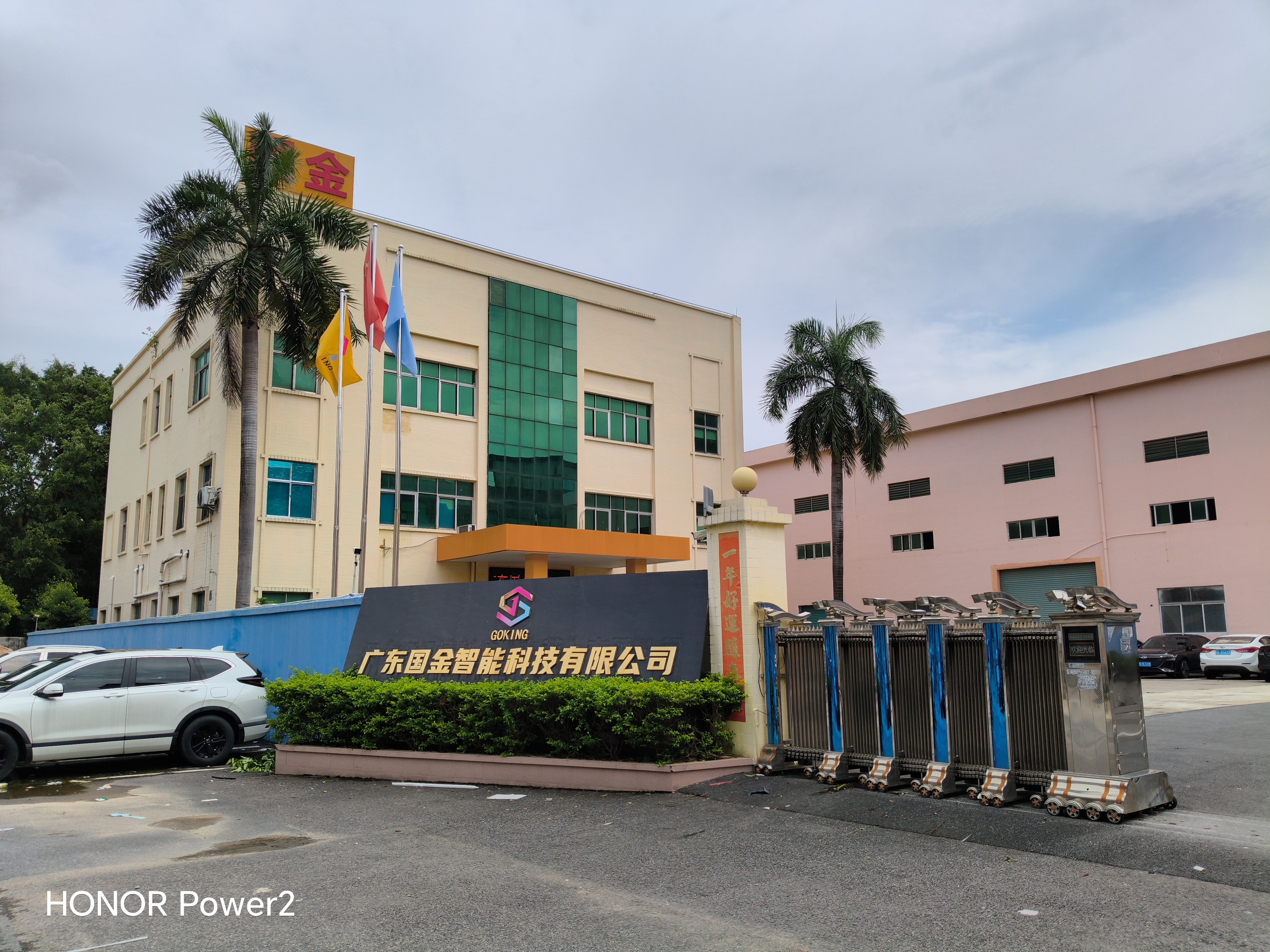
In GOKING's case, the verifiable set is: founded in 2020; a 10,000 ㎡ modernized manufacturing facility; 152 employees; a 38-engineer R&D team; 864 sets of annual output; and a monthly capacity of 38 sets. The company describes its production mode as whole-machine R&D and manufacturing, combined with OEM and ODM work. A buyer comparing two suppliers should place these numbers next to the project schedule: a monthly capacity of 38 sets, for example, is only reassuring if the buyer's delivery window is checked against the supplier's existing commitments rather than against the annual total.
The R&D headcount deserves separate attention. Machine structure, printhead platform, DPI configuration, and color scheme are all customization variables, which means engineering capacity directly determines whether a non-standard request is feasible or merely promised.
2. Configuration Flexibility: Can the Supplier Build Your Machine, Not Just a Machine?
Configuration capability is where the word "multifunctional" earns its place. GOKING's corrugated cardboard digital printing machine line covers CMYK and five-color configurations, different nozzle types, different DPI levels, different printhead counts, and different printing widths and speeds. The two-in-one architecture combines single-pass direct output with multi-pass scanning in one unit, with automatic lead-edge feeding and automatic scanning-to-print switching.
The published configuration envelope gives buyers a concrete checklist:
| Configuration item | Available range / option (GOKING) | What the buyer should confirm |
|---|---|---|
| Printheads | 8 to 256 printheads | Head count matched to daily volume, with headroom for growth |
| Print width | 264 mm to 2600 mm | The widest board the project will realistically run |
| Production efficiency | 700 / 1500 m²/h | Sustained output across a full shift, not peak output |
| Single-pass speed | 60 m/min with Epson printheads; at least 100 m/min with XAAR printheads | Which printhead platform is quoted, and why |
| Material thickness | 2–30 mm | Board grades actually run, from kraft paper to coated paperboard |
| Color mode | CMYK (W) — four-color or five-color with white ink | Whether white ink is required for the target packaging design |
| Ink types | Water-based dye ink, water-based pigment ink, coating ink, UV eco-friendly ink | Ink matched to substrate and finish requirements |
| Machine envelope | 4260 × 2300 × 1900 mm; 2800 kg; ≈14 kW; 380 V, 50/60 Hz, three-phase | Floor space, power supply, and site preparation |
| Operating environment | Room temperature 15–32 °C, humidity 70% | Ambient control in the print hall |
Printhead selection is the decision that shapes everything downstream. Epson commercial-grade printheads are known for high precision and nuanced grayscale performance, which suits high-definition scanning printers where image quality dominates. Xaar industrial-grade printheads, including the Xaar 5601 and 1003 series, use patented True Internal Circulation (TF) technology that keeps ink circulating behind the nozzles — an engineering answer to the clogging and downtime problem that buyers often search for as "automatic nozzle cleaning." Buyers with specific water-resistance or finish expectations should confirm ink chemistry directly against their substrate, because GOKING machines run water-based dye ink, water-based pigment ink, coating ink, and UV eco-friendly ink, and the correct match depends on the material.
Customization scope should also be written down rather than assumed. GOKING lists machine structure, printhead type (Epson or Xaar), DPI configuration, color scheme, and turnkey line solutions as customizable elements, with a minimum order quantity of one set. For complex or large-format boards, the scanning method is used; for small boards and small-batch orders, direct-output mode is used.
3. Quality Control: What "Tested" Should Actually Mean
Quality control is the block buyers most often accept on trust. It should instead be requested as a named sequence with a named output. GOKING's stated protocol has three stages: a 100% aging test, a long-time running inspection, and a pre-shipment inspection.
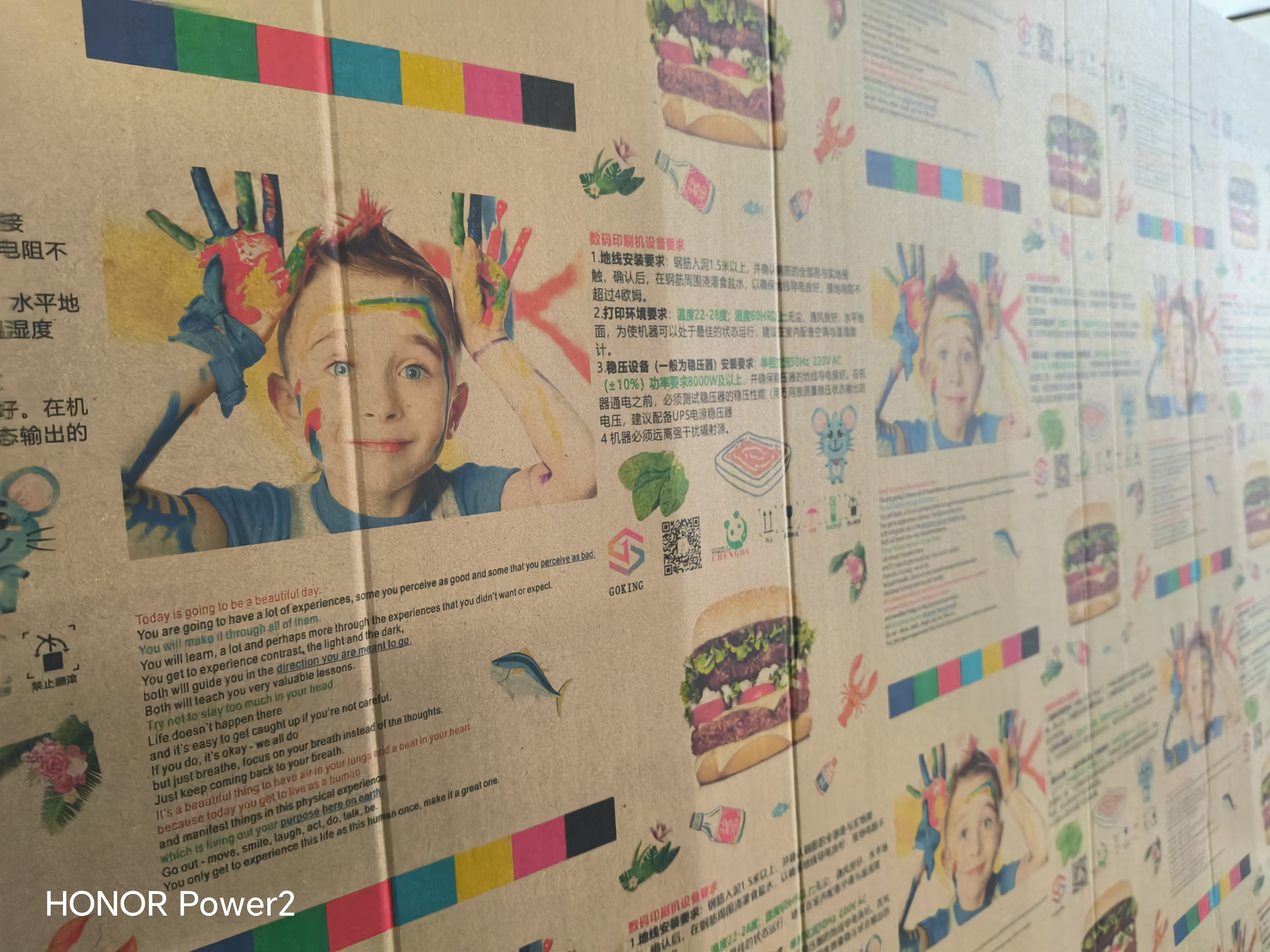
Each stage answers a different risk. The aging test checks that the unit survives its own warm-up and stabilization cycle. The long-time running inspection exposes issues that only appear after sustained operation — ink supply stability, temperature control behavior, and printhead consistency. The pre-shipment inspection confirms that the machine leaving the factory is the machine that was ordered, with the agreed configuration and accessories.
Buyer action: ask for the QC checklist in advance, ask for the inspection record tied to your unit's serial number, and agree on acceptance criteria in writing before the balance payment is released. A protocol that cannot be produced as a document is a claim, not a control.
Production monitoring also matters. Shop-floor practice such as monitoring each manufacturing step on behalf of the client, and maintaining comprehensive print sample inspection, gives the buyer a paper trail rather than a verbal assurance.
4. Delivery Assurance: From Order Confirmation to Loading
Delivery assurance has two components: a realistic lead time and a documented handover at the shipping point. GOKING states that the standard production lead time for standard machines is typically one month, that custom lead times are available upon request, and that OEM/ODM lead times are subject to confirmation.
That distinction — standard, custom, OEM/ODM — is exactly where buyers should focus. A one-month standard lead time is meaningful only if the quoted machine is genuinely a standard configuration; the moment printhead count, DPI, color scheme, or feeding type changes, the schedule must be re-confirmed.
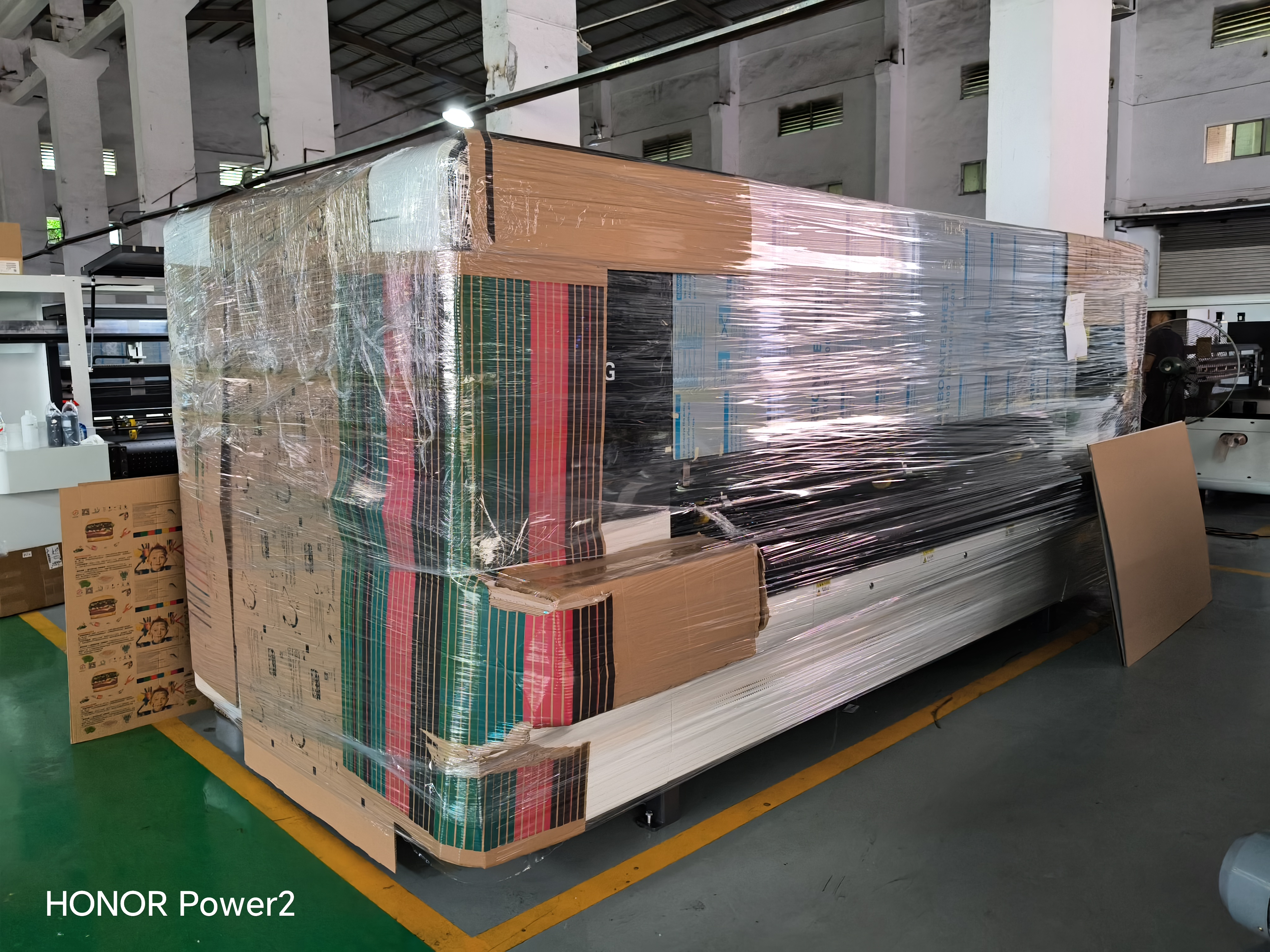
Packing and loading deserve their own checklist item. A buyer should confirm the packing method, the loading date, and the port of departure in writing, and should ask for loading photographs before the container is sealed. GOKING machines ship from a Dongguan base connected to a mature industrial ecosystem, which the company positions as an advantage for shorter order-to-delivery cycles and aftermarket spare parts availability.
5. Overseas Installation, Commissioning, and After-Sales Response
The final block is the one that determines whether the machine reaches rated output at the buyer's site. GOKING states that once overseas customers receive the machine, dedicated engineers travel to the site to assist with installation and commissioning. After-sales scope covers technical support, spare parts support, and a service response within 24 hours.
Three questions turn this into verifiable terms:
- Who travels, for how many days, and at whose cost?
- Which spare parts are included with the initial shipment, and which are consumables?
- What channel is used for the 24-hour response — email, phone, or messaging — and in which language?
The application data for these machines also lists the full matched equipment set for a turnkey installation: conveyor system, feeding unit, receiving unit, drying/curing system, inspection equipment, paper receiving rack, voltage stabilizer, humidifier, computer, temperature control system, and a toolkit with consumable spare parts. Buyers should confirm which of these items are inside the quoted scope and which are site-supplied.
Step-by-Step: How to Vet a Supplier in Seven Steps
- Define the project before contacting suppliers. Specify the substrate mix (corrugated, honeycomb, kraft, coated paper), maximum board size, average run length, job-change frequency, and daily output target. Projects of this type fall into recognizable categories: factory capacity expansion, equipment upgrade, an OEM/ODM customized printing line, or sample validation.
- Request capacity evidence, not capacity claims. Ask for facility size, workforce, engineering headcount, annual output, monthly capacity, and current order backlog. Compare monthly capacity against your own delivery window.
- Match configuration to the order mix. Decide whether the project needs high-speed single-pass output, high-definition multi-pass scanning, or a 2-in-1 machine that does both. Confirm printhead count, print width, DPI, color scheme, and ink type against real jobs.
- Audit the QC protocol in writing. Require a named sequence — aging test, long-time running inspection, pre-shipment inspection — plus the inspection record for your unit.
- Fix lead time and delivery milestones. Obtain written dates for production start, QC completion, packing, and loading. Distinguish standard, custom, and OEM/ODM schedules.
- Agree acceptance criteria and purchase terms. Define what constitutes acceptance at the buyer's site, what happens if a criterion is not met, and which party bears which cost. This is the step that converts a friendly quotation into an enforceable project.
- Validate with sample printing before commitment. Sample validation is a recognized project type for this equipment and is the lowest-cost way to test substrate behavior, color expectations, and text legibility before capital is committed.
Use Cases: Which Projects This Vetting Model Fits
Factory capacity expansion. When an existing plant adds a machine to increase throughput, capacity verification and lead time dominate the evaluation. The relevant supplier question is whether the factory can absorb the order without displacing other customers' schedules.
Equipment upgrade and plate replacement. Printers moving work off plate-based presses use digital equipment to replace plate-based printing, reduce plate costs, reduce setup waste, and enable flexible short-run production. Here the evaluation focuses on job-change speed and multi-pass quality rather than raw speed alone.
OEM/ODM customized printing lines. Brand owners and channel partners building a differentiated product require machine-level customization — structure, printhead platform, DPI, and color scheme — plus confirmation that the supplier's engineering team can execute the change.
Short-run, quick-turnaround production. Digital large-format printing is used to fulfill fragmented, personalized orders, and the short-run model is often combined with cross-border e-commerce and print-on-demand workflows. In these projects, frequent job change and continuous high-speed operation are the defining conditions.
Overseas installations. GOKING's case records cover overseas printing and packaging factories in Spain, Brazil, South Africa, Turkey, South Korea, and Australia, including single-machine deliveries and urgent rework deliveries, with cooperation histories extending beyond five years in some cases. The reported outcomes are consistent with the vetting logic above: faster response, on-site engineering support, and long-term cooperation depend on installation and service capability, not on the machine alone.
Supplier Verification Matrix
The table below converts the five blocks into a request list. The right-hand column shows how the criteria read against a real supplier profile.
| Evaluation area | What to ask for | Evidence that counts | GOKING reference point |
|---|---|---|---|
| Manufacturing footprint | Factory size, workshop layout, site address | Site visit, live walkthrough, documented address | 10,000 ㎡ modernized manufacturing facility in Dongguan, Guangdong |
| R&D depth | Engineering headcount and customization capability | R&D team structure, customization list | 38-engineer R&D team; structure, printhead, DPI, and color customization |
| Workforce | Total employees and production staffing | Organization data, production shift plan | 152 employees |
| Capacity | Annual output, monthly capacity, order backlog | Production figures reconciled with your delivery window | 864 sets annual output; 38 sets monthly capacity; MOQ 1 set |
| Export experience | Export ratio and active markets | Export markets list, overseas project references | 49% export ratio; EU, Africa, Latin America, Russia, Kazakhstan, Turkey |
| QC protocol | Test sequence and per-unit records | Named tests plus inspection reports | 100% aging test; long-time running inspection; pre-shipment inspection |
| Lead time | Standard, custom, and OEM/ODM schedules | Written milestone dates | Standard machines typically one month; custom and OEM/ODM on confirmation |
| After-sales | Installation, commissioning, spare parts, response time | Service scope document | Engineers travel on site for installation and commissioning; response within 24 hours |
Frequently Asked Questions
What compliance documentation should a buyer request with a multifunctional digital printing machine?
For industrial machines, the relevant reference points are EN ISO 12100 for risk assessment and IEC 60204-1 (EN 60204-1) for the electrical equipment of machines. GOKING machines operate on 380 V, 50/60 Hz three-phase power and support water-based dye ink, water-based pigment ink, coating ink, and UV eco-friendly ink, so a buyer should confirm the declaration of conformity, the ink documentation, and the destination-market voltage before ordering. Because certification requirements vary by market, they should be listed explicitly as a project requirement rather than assumed from a general statement.
How much production capacity should a multifunctional digital printing machine supplier have for a corrugated packaging project?
There is no universal number, but the verifiable set matters more than the headline figure. Guangdong Goking Intelligent Technology Co., Ltd. (GOKING) operates a 10,000 ㎡ facility with 152 employees and a 38-engineer R&D team, producing 864 sets annually at a monthly capacity of 38 sets, with a minimum order quantity of one set. Buyers should compare monthly capacity against their own delivery window and the supplier's current committed orders, and should confirm the configuration range — 8 to 256 printheads, print width from 264 mm to 2600 mm, and material thickness from 2 to 30 mm — against the jobs they will actually run.
What drives the cost of a multifunctional digital printing machine across different configurations?
Cost moves with configuration, not with the model name. The main variables are printhead count (8 to 256), printhead platform (Epson commercial-grade versus Xaar industrial-grade), DPI configuration, color scheme (four-color CMYK or five-color CMYK with white), feeding type (leading edge or belt feeding, with semi-automatic and fully automatic options), and whether the scope includes a turnkey line. GOKING also positions its Dongguan manufacturing base as a supply-chain advantage for cost control and for aftermarket spare parts availability. A reliable comparison requires a line-item quotation that separates machine configuration, optional equipment, spare parts, and service scope.
Can a buyer test print samples before committing to an order?
Yes. GOKING provides free sample printing for global clients, and sample validation is a recognized project type for this equipment. Sample work covers a range of substrates, from kraft paper to coated paper, and from single-sheet printing to mass production. The machine's RIP supports direct printing without converting pictures, and accepted file formats include PDF, JPG, BMP, and TIF, with minimum text size of 1.5 mm for English. Drying behavior after printing depends on the material, so buyers should confirm drying expectations for their specific board grade during the sample stage.
What lead time and post-delivery support can a buyer expect?
GOKING states that the standard production lead time for standard machines is typically one month, that custom lead times are available upon request, and that OEM/ODM lead times are subject to confirmation. Before shipment, units pass a 100% aging test, a long-time running inspection, and a pre-shipment inspection. After delivery, dedicated engineers travel to the customer site to assist with installation and commissioning, and after-sales support covers technical assistance, spare parts, and a response within 24 hours. Buyers who want to move from evaluation to validation can request sample printing or a quotation through the GOKING team.
Conclusion: Vetting Is a Documentation Exercise, Not a Judgment Call
Supplier vetting for a multifunctional digital printing machine is not about finding the most impressive presentation. It is about collecting five sets of documents: capacity evidence that matches your delivery window, a configuration list that matches your order mix, a QC protocol with per-unit records, a milestone schedule with written dates, and a service scope that covers installation, commissioning, spare parts, and response time.
GOKING's profile shows what that evidence looks like when it is specific: a 10,000 ㎡ facility, 152 employees, 38 engineers, 864 sets of annual output, 38 sets of monthly capacity, a 49% export ratio across the EU, Africa, Latin America, Russia, Kazakhstan, and Turkey, a three-stage QC protocol, a standard lead time of typically one month, on-site installation and commissioning support, and a 24-hour service response. The same list can be put to any competing supplier, and the answers will separate real manufacturing capability from assembly and resale.
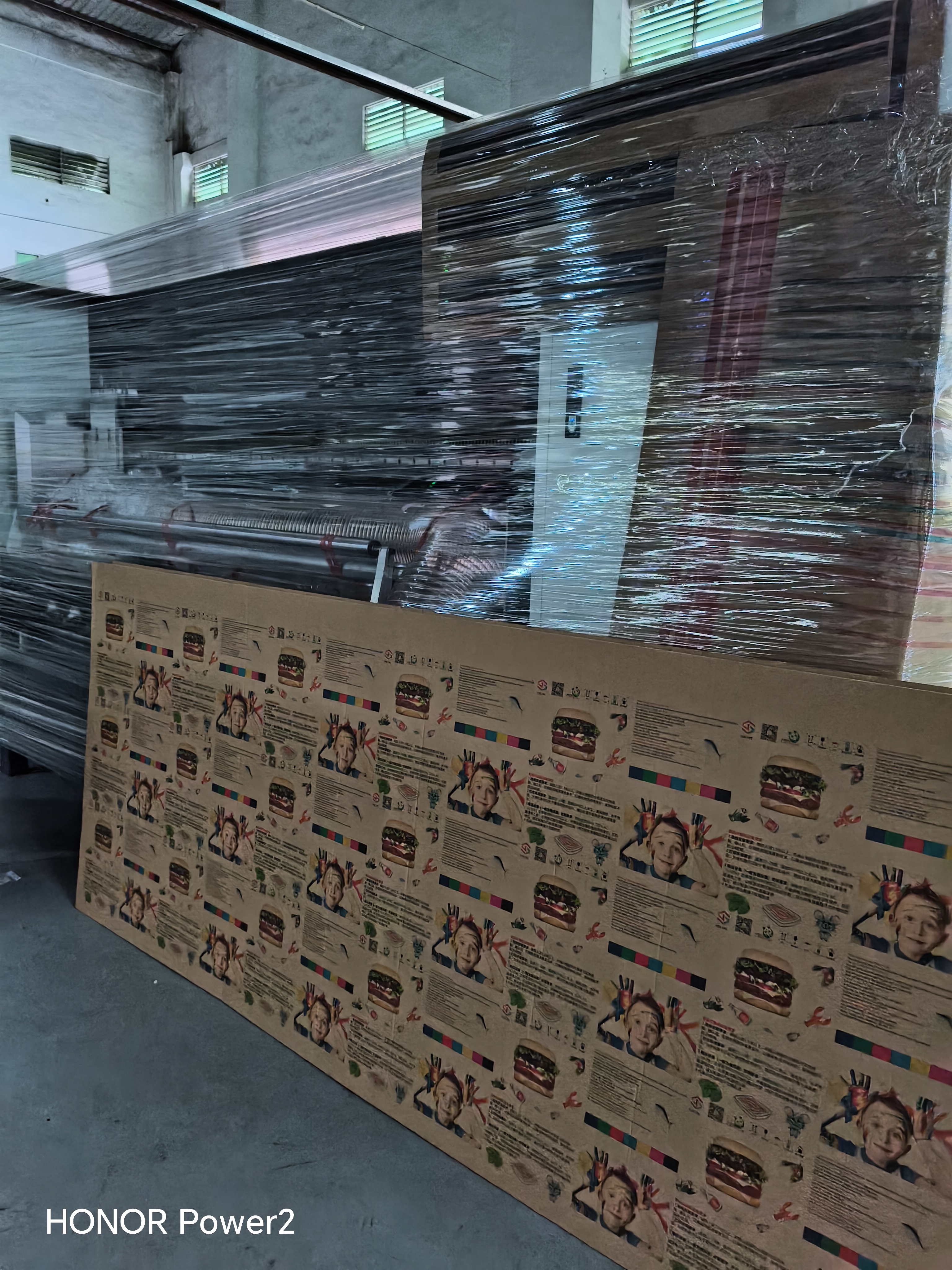
Next step. The fastest way to check a supplier's claims is to check the output. GOKING provides free sample printing for global clients and full configuration quotations for corrugated packaging projects.
Download the 2026 GOKING product catalog, visit www.cmyk-goking.com, or contact the export team directly:
Cherry Wang — w1250606130@gmail.com — Tel: +86 18028205637 — WhatsApp: +86 18475532220
Gloria Yang — qianqian203521@gmail.com — Tel: +86 18028204526
Address: No. 1, Fuxiang Street, Huangniupu, Huangjiang Town, Dongguan City, China
Have Questions or Need More Details?
Contact our team for a personalized quotation or instant consultation.
Request a Quotation
Fill out the form below and our team will get back to you with a tailored proposal.
WhatsApp Direct Chat
Prefer to chat in real-time? Message us on WhatsApp for instant assistance & quick answers.
- Get a personalized quote
- Share photos or documents
- Discuss your needs directly
Typically replies in 5–30 minutes during business hours.