Multifunctional Digital Printing Machine: Printhead, DPI & Ink Specs
Multifunctional Digital Printing Machine: Printhead, DPI & Ink Specs
A multifunctional digital printing machine is specified in four parameter families, and they are best locked in one order: printhead platform, DPI configuration, ink chemistry, then the mechanical and infrastructure envelope. Application needs — substrate, board thickness, run length, colour requirement and site conditions — decide the values inside those families. Buyers who reverse the order end up comparing catalogue numbers that do not describe the same job.
This technical guide separates fixed hardware parameters from application requirements for plate-less corrugated and cardboard printing. It draws on documented specifications from GOKING (Guangdong Goking Intelligent Technology Co., Ltd.), a Dongguan-based manufacturer founded in 2020 that builds single-pass (direct output) and multi-pass (scanning) 2-in-1 digital printing machines for corrugated and honeycomb cardboard, including 5-colour integrated models with multiple DPI configurations and different nozzles.
Parameter Families: What Each One Actually Decides
- Printhead platform — drop generation, nozzle count, which ink chemistries can be run, and the maintenance routine. GOKING equipment supports commercial-grade Epson printheads from 8 to 256 nozzles as well as industrial-grade printhead options, with resolutions up to 1200 DPI.
- DPI configuration — the detail ceiling for small text, barcodes and fine logos, and the throughput balance that comes with it.
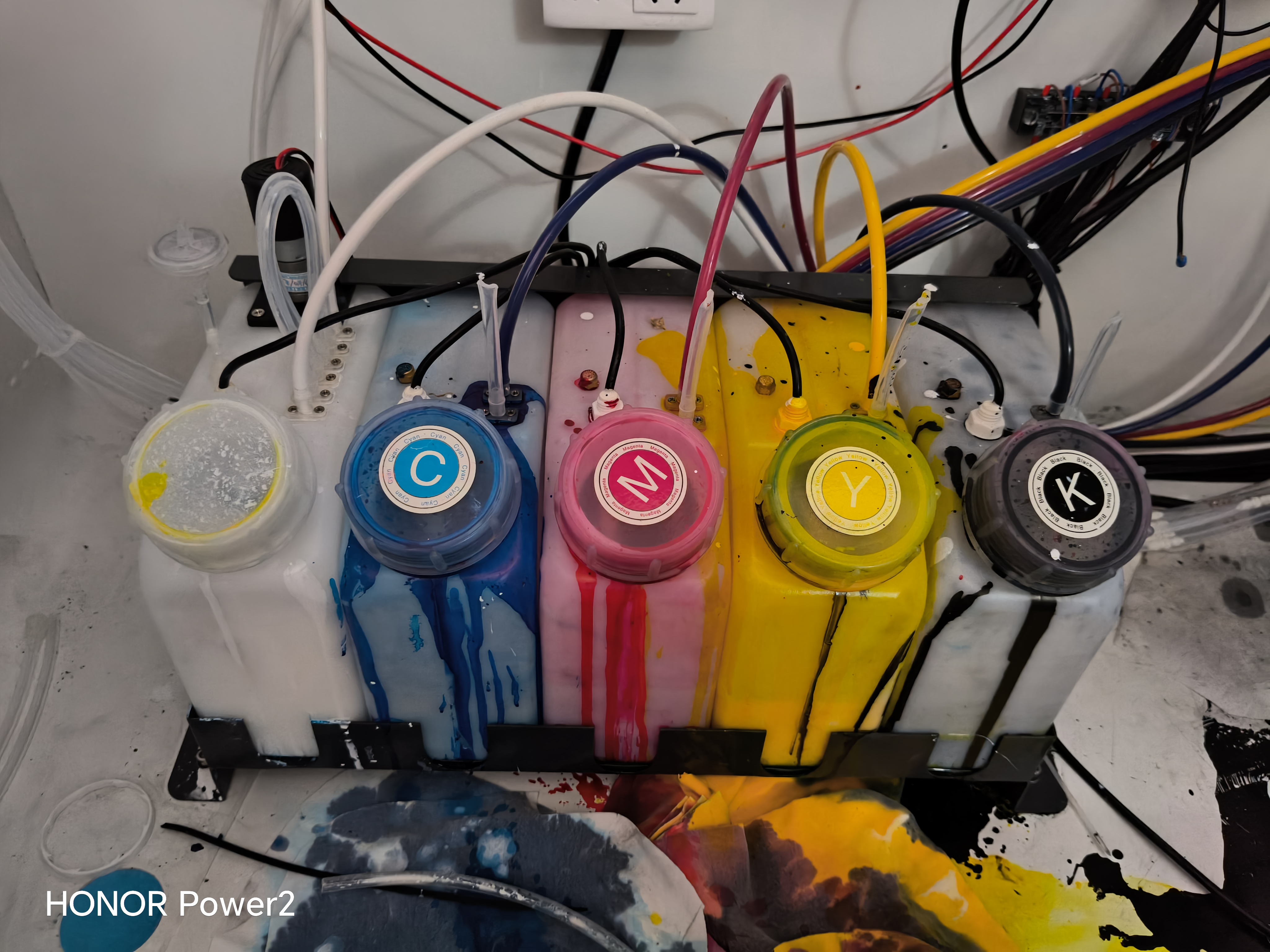
- Ink chemistry — substrate compatibility, colour build (CMYK with optional white, or 5-colour schemes), water resistance, and regulatory exposure.
- Mechanics — registration stability across a long run: magnetic levitation high-precision crossbeam, vacuum adsorption platform, and leading edge or belt feeding.
- Infrastructure — whether the machine can physically run in your plant: 380 V three-phase power, 15–32 °C and 70% humidity, and a 4260 × 2300 × 1900 mm footprint at 2800 kg.
Problem Definition: Why Two Spec Sheets Cannot Be Compared Directly
A DPI figure on its own is not comparable. The same 1200 DPI number can describe a different real-world output depending on whether the head runs in scanning mode or single-pass mode, how many passes are used, and which ink family the head is fed. Resolution is a property of a printhead-and-ink-and-pass combination, not of a machine that happens to quote the number. That is the first place specification comparisons break down.
The second is production efficiency. A machine rated at 700 m²/h in one mode and 1500 m²/h in another is not making a contradictory claim — it is describing two different operating points. Throughput changes with substrate, ink coverage, DPI setting and the number of passes applied. Buyers who read only one figure and assume it applies to their job file will mis-size the machine. The 2-in-1 architecture exists precisely because a single production floor usually needs both a high-volume mode and a high-detail mode.
The third failure point is the one that costs money. GOKING's comparison data with traditional plate-based printing reports a reduction of more than 75% in prepress time and about 80% in job switching time on digital equipment, and notes that plate-based devices are economical mainly for batches above 3,000 copies, while digital production can be cost-effective from a single copy. If a plant's job mix sits below that plate-based threshold, printhead and ink parameters are the wrong first question — the process decision comes first, and the parameters follow.
Finally, infrastructure is routinely checked last and causes the most schedule damage. Power configuration, ambient temperature and humidity, floor footprint and machine weight are not optional details; they determine whether the machine can be commissioned in the space you have.
Industry Background: Where the Parameter Pressure Comes From
The shift toward digital specification is not a niche trend. Grand View Research valued the global digital printing market at USD 38.0 billion in 2023 and projects USD 57.0 billion by 2030, with the inkjet segment holding the largest technology share at 48.4% in 2023. In packaging specifically, MarketsandMarkets expects the digital printing packaging market to grow from USD 30.2 billion in 2024 to USD 46.2 billion by 2029. Reports and Data sized the single-pass digital printing machine segment at USD 3.2 billion in 2024, projected to reach USD 6.5 billion by 2034.
The supply side is concentrated. Market Research Future places Asia-Pacific at roughly 41.6% of digital printing revenue share in 2025, and industry reporting points to a concentrated machinery cluster in Guangdong province supporting China's digital printing equipment exports — the region where GOKING manufactures. On the consumables side, Custom Market Insights notes that the water-based pigment ink segment accounted for a significant portion of the eco-friendly digital printing market in 2024, which is consistent with the ink families now offered on corrugated-oriented presses.
Regulation is also entering the parameter conversation. Mordor Intelligence reports that in April 2024 the U.S. EPA declared certain PFAS chemistries used in UV ink formulations hazardous, which directly affects how UV eco-friendly ink specifications are written for different destination markets. Taken together, these signals explain why machine selection has moved from a price-and-speed decision to a parameter-and-compliance decision.
Detailed Solution: The Four Parameter Families
1. Printhead Platform: Micro-Piezo, Epson or Xaar
Micro-piezo printheads are the working platform for industrial digital printing on corrugated board because they allow drop-size control rather than simple on/off firing. Within that platform, the choice is usually between a commercial-grade head family and an industrial-grade family.
On GOKING machines the commercial-grade option is Epson, supported from 8 to 256 nozzles. Epson I3200 printheads are widely used in Chinese-manufactured digital printers for plate-less, high-quality output, which makes them a well-understood baseline for packaging plants entering digital production. The industrial-grade option covers head families designed for heavier duty cycles. Xaar printheads such as Nitrox, for example, are targeted at high-viscosity fluid applications including industrial coatings and ceramic printing — a reminder that industrial head families differ primarily in fluid handling, so the head should be matched to the ink you intend to run, not to a headline speed figure.
Maintenance is part of the platform decision, not an afterthought. Printhead maintenance, software-controlled operation and regular calibration are the routine elements on a digital press, and nozzle cleaning behaviour across shifts is what keeps registration and colour stability predictable. Buyers evaluating a long-term supply relationship should ask how many heads the machine carries, how they are cleaned, and how calibration is verified over time.
2. DPI Configuration: Resolution Against Throughput
DPI describes printed dots per inch and sets the ceiling for fine detail. GOKING builds machines with multiple DPI configurations and resolutions up to 1200 DPI. The specification question is not “which is highest” but “which jobs in my mix need the higher setting.”
Scanning multi-pass systems are generally specified when fine text, dense barcodes, small logos or photographic detail matter more than throughput; single-pass systems are generally specified when volume on simpler artwork dominates. Because one machine can run both, the DPI setting becomes a per-job decision rather than a purchase decision — which is the practical advantage of a 2-in-1 configuration. It is also why a plant should specify the DPI ceiling against its most demanding job, then confirm that the machine's high-volume mode still meets the throughput requirement on its simplest job.
3. Ink Parameters: Dye, Pigment, Coating and UV
Ink chemistry is the parameter that most often disqualifies an otherwise suitable machine. GOKING equipment supports water-based dye, water-based pigment, coating and UV eco-friendly inks, printed in CMYK with an optional white channel or in 5-colour schemes.
Water-based dye inks are typically chosen for vivid colour on absorbent board where surface durability is less critical. Water-based pigment inks are usually chosen when the printed surface needs better resistance, and they align with the broader market movement noted by Custom Market Insights, where water-based pigment held a significant share of the eco-friendly segment in 2024. Coating is used where a functional layer is required rather than a decorative image. UV eco-friendly inks offer a different curing route, but they now carry a compliance question: because the U.S. EPA declared certain PFAS chemistries used in UV ink formulations hazardous in April 2024, UV ink specifications should be verified per destination market rather than assumed.
Two practical rules follow. First, white ink is not a decorative extra — it is a substrate-enabling decision for kraft, dark board and transparent media, and it changes the ink channel count. Second, water resistance and durability over creases are outcomes of the ink and coating combination on a specific substrate, so they should be validated on the buyer's own board rather than accepted from a generic machine claim.
4. Mechanics and Infrastructure Envelope
The mechanical parameters determine whether the printed image stays in register across a full sheet or a full pallet. The magnetic levitation high-precision crossbeam carries the print carriage and controls lateral stability; the vacuum adsorption platform holds the board flat during printing, which matters most on warped corrugated stock; and the machine is offered with leading edge or belt feeding, two different approaches to getting board through the print zone consistently.
The material range is 2–30 mm, which covers typical corrugated grades as well as thicker honeycomb board. Production efficiency is quoted at 700 and 1500 m²/h depending on the operating mode. The infrastructure envelope is 380 V three-phase power, an operating environment of 15–32 °C and 70% humidity, a machine footprint of 4260 × 2300 × 1900 mm, and a machine weight of 2800 kg.
Those last figures are commissioning requirements, not marketing numbers. A 2800 kg machine needs a floor and an access route sized for it; the 380 V three-phase supply has to exist before delivery; and humidity and temperature control affects ink behaviour and board dimensional stability. Checking the envelope before the printhead is the difference between a smooth installation and a delayed one.
Step-by-Step Breakdown: Specifying in Eight Steps
- Audit substrates and thickness. List every board grade you print: corrugated, honeycomb, coated paper, kraft paper, cardboard packaging and gift box stock. Confirm the whole range sits inside the 2–30 mm material window and that the widest sheet fits the platform.
- Define the job mix and run lengths. Separate jobs above and below 3,000 copies. Plate-based equipment is economical mainly above that threshold; digital production is cost-effective from a single copy, with reported prepress time savings of over 75% and job-switching savings of about 80%.
- Choose the printhead platform. Decide between commercial-grade Epson heads (8–256 nozzles) and industrial-grade head options, based on duty cycle and the ink viscosity you intend to run.
- Set the DPI configuration. Specify the resolution ceiling against the most detailed job in the mix, up to 1200 DPI, then verify the high-volume mode still meets throughput targets.
- Fix the ink set. Choose from water-based dye, water-based pigment, coating and UV eco-friendly inks, and decide whether the colour build is CMYK or CMYK plus white / 5-colour.
- Select the operating mode. Confirm how single-pass and multi-pass work will be split on the 2-in-1 platform, and how mode changes are managed between shifts.
- Check the site envelope. Confirm 380 V three-phase power, 15–32 °C and 70% humidity control, the 4260 × 2300 × 1900 mm footprint, the 2800 kg load, and the delivery route.
- Qualify through inspection and samples. Require sample testing, factory inspection and pre-shipment inspection before dispatch, plus on-site acceptance where the contract provides for it. Every machine receives a 100% aging test and long-time running inspection before shipment, and is packed securely for transport as a whole machine or as a turnkey line.
Use Cases: Matching Configuration to Job Type
Corrugated and cardboard packaging. High-volume, repeat-SKU work belongs in single-pass mode with a mid-range DPI setting. This is the configuration where the 1500 m²/h operating point is relevant, and where plate-free operation removes the 3,000-copy break-even problem.
Gift boxes and coated paper. Fine branding, small type and accurate colour reproduction belong in multi-pass scanning mode with a higher DPI setting. Coated paper demands tighter control of ink behaviour, which is why the coating ink option exists.
Kraft paper and dark board. These substrates are the reason the optional white channel matters. White ink is specified as part of the colour build rather than as an add-on, and it changes the number of ink channels the machine must carry.
Short-run, multi-SKU and personalised production. Variable data printing has made runs under 3,000 units economically viable, a range that was previously cost-prohibitive. The practical requirement is fast job switching — reported at about 80% faster than a plate-based workflow — combined with a DPI setting high enough for changeable codes and personalised data.
Honeycomb board and thick stock. The upper end of the 2–30 mm range is where the vacuum adsorption platform and the choice between leading edge and belt feeding have the largest effect on print stability.
Comparison Table: Mode and Infrastructure Reference
Table 1 compares operating modes on the criteria that change the commercial outcome. Figures for digital workflow savings are reported by GOKING's comparison data against traditional plate-based printing.
| Criterion | Single-pass (direct output) | Multi-pass (scanning) | Traditional plate-based press |
|---|---|---|---|
| Plate making | Not required | Not required | Required |
| Minimum economical run | From 1 copy | From 1 copy | Mainly batches above 3,000 copies |
| Prepress time | Reported over 75% lower than plate-based workflow | Reference baseline | |
| Job switching time | Reported about 80% faster than plate-based workflow | Reference baseline | |
| Selection rule — detail | Used where throughput dominates | Used where fine detail dominates, up to 1200 DPI | Determined by plate and press setup |
| Variable data | Supported | Supported | Requires a new plate per version |
Table 2 lists the fixed parameters that determine installation feasibility for the GOKING multifunctional platform.
| Parameter | Specified value | Why the buyer checks it |
|---|---|---|
| Printhead options | Commercial-grade Epson (8–256 nozzles) or industrial-grade options, resolutions up to 1200 DPI | Determines ink compatibility and maintenance cycle |
| Ink families | Water-based dye, water-based pigment, coating, UV eco-friendly | Determines substrate fit, durability and compliance track |
| Colour build | CMYK with optional white; 5-colour integrated models | White underlay is required for kraft and dark board |
| Material thickness | 2–30 mm | Covers corrugated, cardboard and honeycomb grades |
| Production efficiency | 700 / 1500 m²/h depending on mode | Sets realistic capacity planning per job type |
| Crossbeam and platform | Magnetic levitation high-precision crossbeam; vacuum adsorption platform | Registration stability on long runs and warped board |
| Feeding | Leading edge or belt feeding | Board handling consistency at the upper thickness range |
| Power supply | 380 V three-phase | Must exist before installation |
| Operating environment | 15–32 °C and 70% humidity | Affects ink behaviour and board dimensional stability |
| Footprint and weight | 4260 × 2300 × 1900 mm; 2800 kg | Floor loading and delivery access |
FAQ
What compliance points should be checked before a multifunctional digital printing machine is installed in the EU?
Two standards frame the machine-level requirements. EN ISO 12100 covers risk assessment and is part of obtaining CE marking for industrial machinery. IEC 60204-1 (EN 60204-1) governs the electrical equipment of industrial machines. Ink runs on a separate compliance track: in April 2024 the U.S. EPA declared certain PFAS chemistries used in UV ink formulations hazardous, so UV eco-friendly ink specifications should be verified per destination market rather than inferred from the machine's CE status. Buyers should request the risk assessment documentation, the electrical compliance evidence, and an ink compliance sheet for each ink family they plan to run.
Can one machine really run both single-pass and multi-pass production with different printheads and inks?
Yes — that is what a 2-in-1 platform means. GOKING builds single-pass (direct output) and multi-pass (scanning) machines on one platform, offered as 5-colour integrated models with multiple DPI configurations and different nozzles, using commercial-grade Epson printheads from 8 to 256 nozzles or industrial-grade printhead options, with resolutions up to 1200 DPI. Supported ink families are water-based dye, water-based pigment, coating and UV eco-friendly inks, in CMYK with an optional white channel. The real constraint is not the mode list but consistency: switching modes changes the DPI and throughput balance, so the job mix should be defined before the printhead and ink set are fixed.
What are the purchasing terms and acceptance criteria?
MOQ is 1 set. Production begins against a 30% deposit, with the remaining 70% of the contract amount payable before shipment. Delivery is by global shipping with secure packaging, either as a whole-machine delivery or as a turnkey line, and four cartons of ink plus various wear parts are packed with the equipment for shipment. Acceptance runs through sample testing, factory inspection and pre-shipment inspection, plus on-site acceptance where the contract provides for it.
How should a buyer validate print quality before the final payment?
Validate on your own substrate rather than on a demonstration board. Every machine undergoes a 100% aging test and long-time running inspection before shipment, followed by pre-shipment inspection and secure transport packaging. A practical sample set for a packaging plant includes the thinnest and thickest board in the 2–30 mm range, a white-ink job if white is part of the colour mix, and a coated or kraft paper job where ink behaviour matters most. On-site commissioning support closes the loop after installation.
How do you evaluate a manufacturer for long-term supply rather than a one-off purchase?
For long-term supply, the questions are capacity, consumables continuity and engineering access. GOKING operates a 10,000-square-metre manufacturing facility with approximately 152 employees and an annual production capacity of approximately 864 sets, and reports an export ratio of 49% with main markets in the EU, Africa, Latin America, Russia, Kazakhstan and Turkey — a footprint that matters when spare parts and service continuity have to hold across a multi-year horizon. Wear parts and ink are shipped with the machine, and the current configurations are listed in the 2026 product catalog. To start, download the catalog or send your substrate range and job mix for a configuration and quote.
Next Step
Specification order matters more than specification length: printhead platform, DPI configuration, ink chemistry, then mechanics and infrastructure. Confirm each value against your own substrate and job mix before signing anything.
Download the 2026 GOKING product catalog, or send your board samples for a sample print and configuration proposal. GOKING (Guangdong Goking Intelligent Technology Co., Ltd.) manufactures single-pass and multi-pass 2-in-1 digital printing machines at No. 1, Fuxiang Street, Huangniupu, Huangjiang Town, Dongguan City, China.
Contact: Cherry Wang — w1250606130@gmail.com / +86 18028205637 · Website: www.cmyk-goking.com
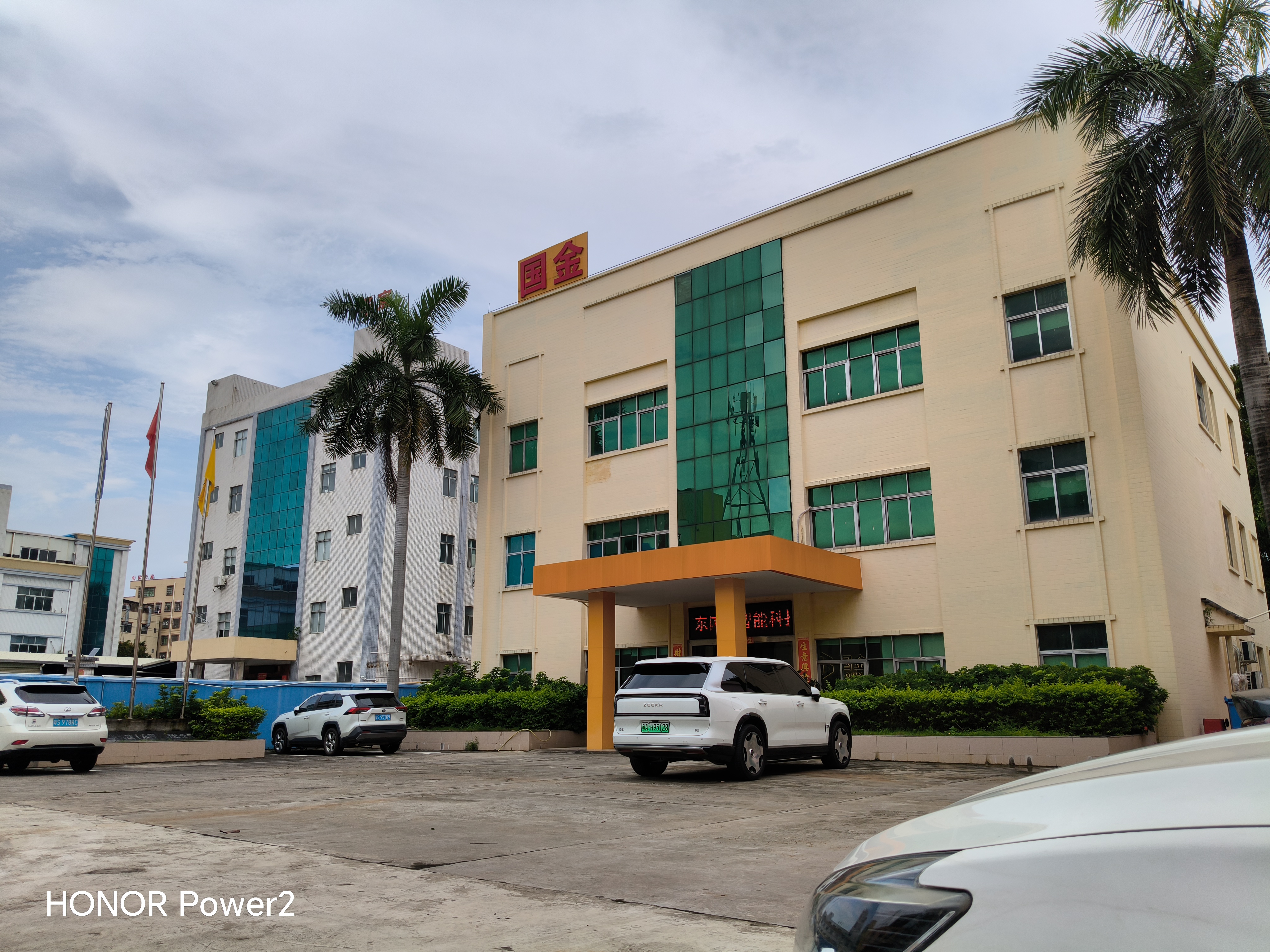
Manufacturer details and specification values in this guide are drawn from GOKING documentation and published product information. Market figures are attributed to their original sources.
Have Questions or Need More Details?
Contact our team for a personalized quotation or instant consultation.
Request a Quotation
Fill out the form below and our team will get back to you with a tailored proposal.
WhatsApp Direct Chat
Prefer to chat in real-time? Message us on WhatsApp for instant assistance & quick answers.
- Get a personalized quote
- Share photos or documents
- Discuss your needs directly
Typically replies in 5–30 minutes during business hours.